



Despite rising interest rates and an overall decline in retail trading, occupancy in the retail sector has improved over the last 12 months. Ray White’s recent survey of the Sydney prime retail core (bounded by Martin Place, Castlereagh, Park and George Streets) has recorded total vacancy at 8.3 per cent down from 10.2 per cent in January 2023. The area described as “super prime”, being the Pitt Street mall precinct, is boasting zero vacancy after reaching 8 per cent last year.
Luxury retailers continue to grow their footprint with an increase in these mainly international retailers, notably offering clothing, footwear and other personal goods such as jewellery, bags and other soft goods. This year we have seen luxury retailers account for 25.7 per cent of all shops surveyed up from 23.3 per cent 12 months prior. The greatest concentration of these luxury retailers is found across King Street, representing more than 70 per cent of shops, with Tiffany at its centre on the corner of Pitt Street. Luxury retailers are dotted across the city and represented in most streets surveyed, however, the Pitt Street precinct, including the mall, is home to a range of international and domestic brands including some flagship retailers like Zara and the new Lego store.
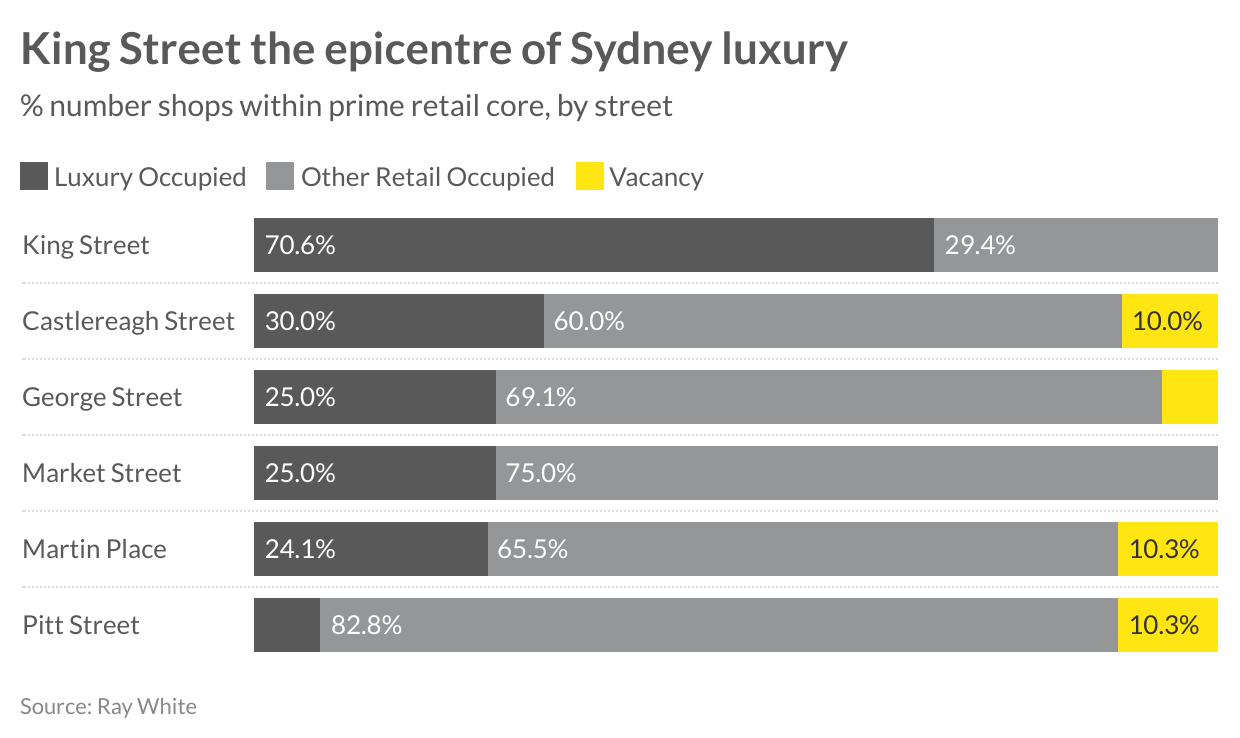
The growth in luxury retailing does not align with the overall change in sentiment surrounding retail turnover, however, the ongoing growth in tenancies in this segment is testament to the high profile Sydney CBD location on the world's stage. Many of these retailers call Sydney’s prime retail core home to their single Australian location or flagship offering. With Sydney home to more than 800 international flights per month, visitors to the region are approximately 30 per cent higher than any other city in Australia, with the southern and central Asian region a key growth market. These visitors have been key to the growth in the luxury sector and their ongoing vibrancy within the Sydney CBD retail precinct, growing away from traditional luxury locations of Castlereagh Street to extend down King Street into George Street.
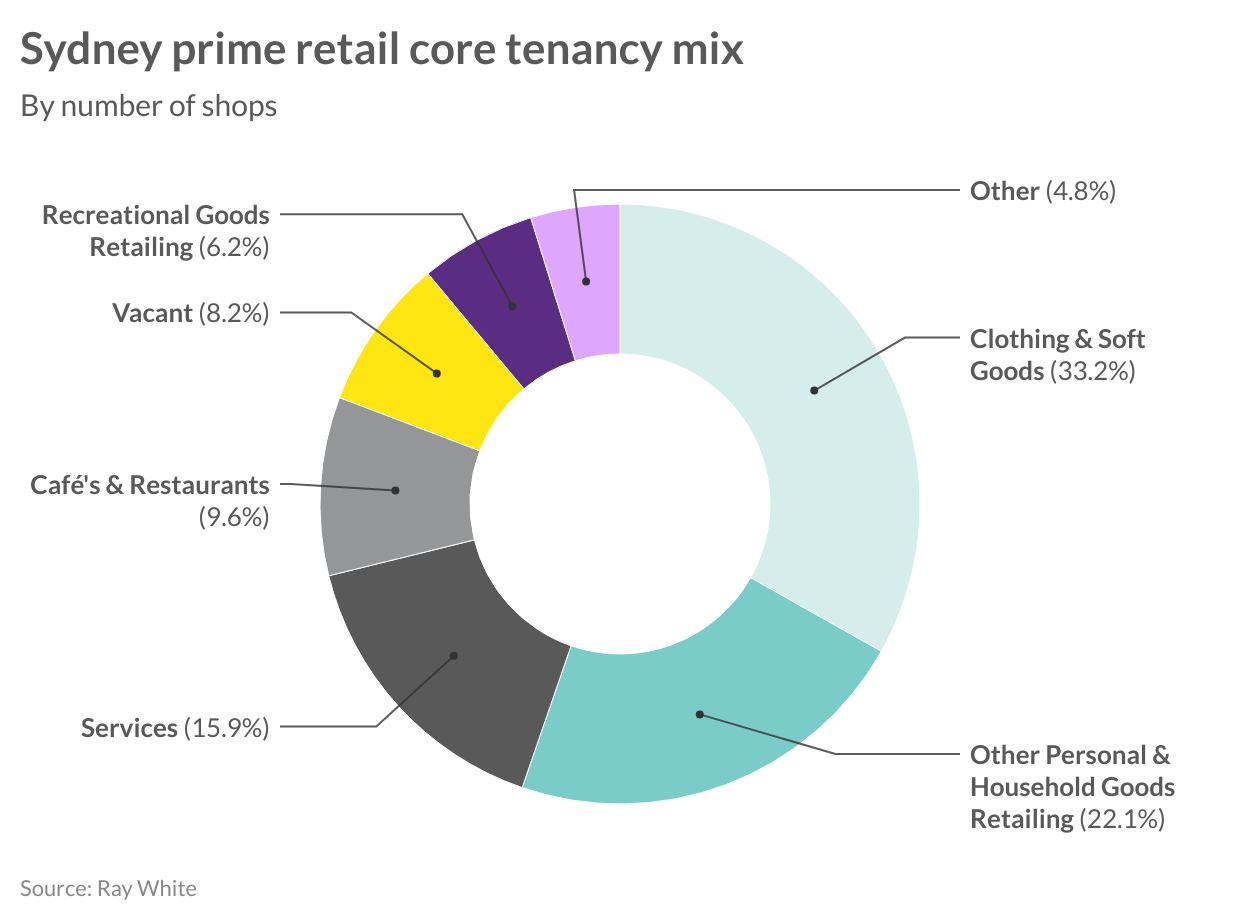
Across the broader region we have seen limited change in the make up of retail in this core Sydney CBD retail area. Clothing and soft goods make up 33.2 per cent of all shops, slightly up from 31.1 per cent last year, with a growth in footwear and womens fashion driving this. Similarly, the other personal and household goods have increased due to some new jewellery and accessory stores. We expect food retailers to continue to grow their footprint across the CBD capitalising on a more lively weekday trade as staff return into the city, coupled with tourists and local shoppers. The service industry has been a big growth sector for retail, notably nails, finance, and hair services, particularly in local high street retail locations. In the Sydney CBD retail core we have witnessed a small decline this period, bringing the region back to a true retail experience of years gone by, where weekend window shopping, trying on clothes and stopping for a coffee was the priority rather than stopping in for a medical or beauty procedure.
